
Back to: AMERICAN HISTORY 101: PRE-COLONIAL TO CIVIL WAR
UNIT I — Foundations of America: Pre-Colonial Through the Colonial Era
(Lessons 1–8)
Unit I surveys the land and peoples of North America before European arrival, traces the age of exploration, and examines how England’s thirteen colonies took shape — each with its own character, economy, and idea of self-government. By the end of this unit students will understand why colonial life laid the groundwork for the American Revolution and the Constitution.
Lesson 1 – America Before Columbus: The First Peoples
| THEME | Long before Europeans arrived, sophisticated nations governed themselves, traded across continents, and built cities — showing that self-government is a deeply rooted human capacity. |
Summary
Thousands of years before Christopher Columbus set sail, millions of people already called North America home. From the mound-building Mississippians of the heartland to the Haudenosaunee Confederacy of the Northeast, from the Pueblo peoples of the Southwest to the salmon fishers of the Pacific Coast, these First Peoples developed languages, legal traditions, trade networks, and systems of government. When we study their world, we are not merely studying a footnote to American history — we are studying part of its foundation. Understanding who was here first, and how they organized their lives, helps explain much of what came afterward.
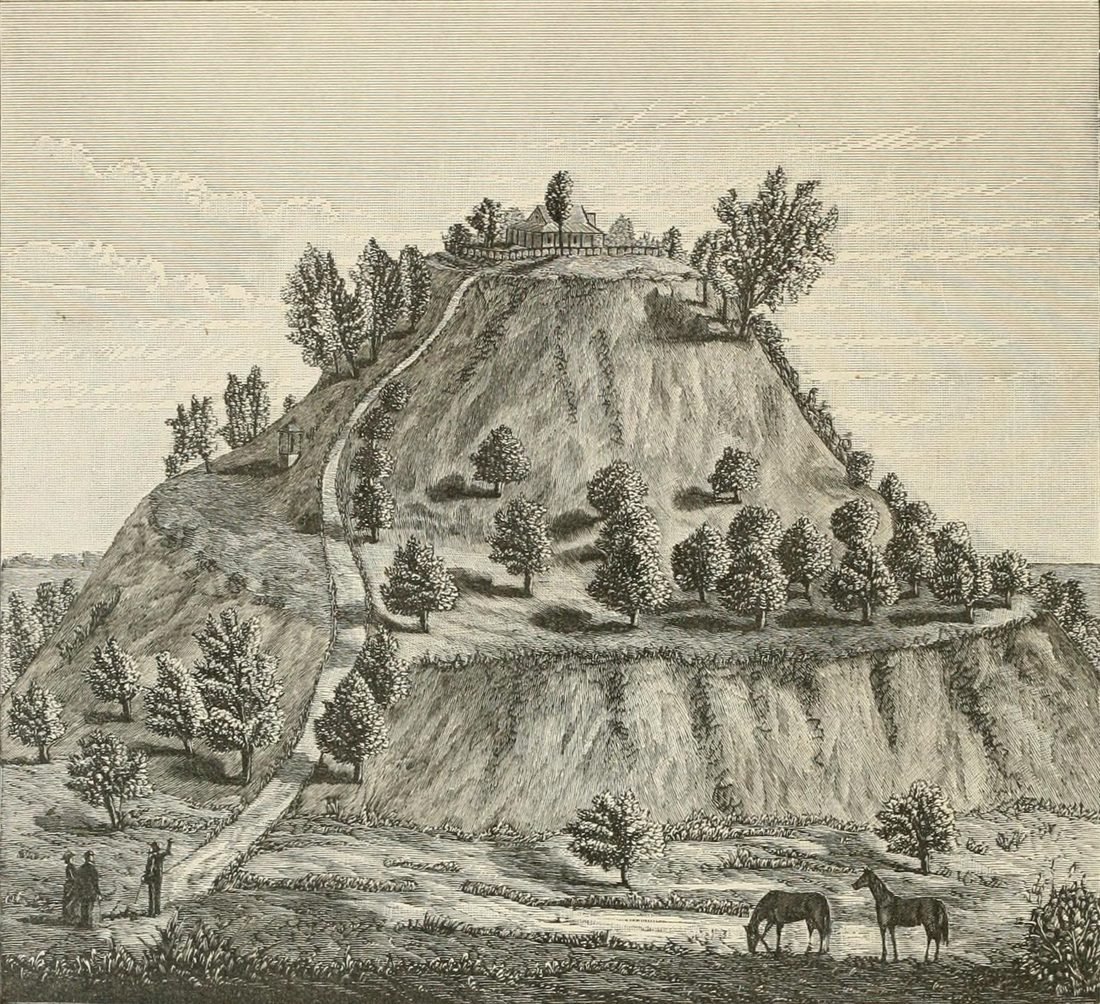
In its prime, Cahokia was a prosperous city with a population similar to London’s. But this sprawling Native American metropolis from the Mississippian culture vanished long before Europeans arrived in North America. What happened?
Learning Objectives
By the end of this lesson, you should be able to:
- Identify at least four major cultural regions of pre-contact North America and name a representative people from each.
- Describe how geography shaped the economies and societies of different Indigenous groups.
- Explain the political structure of the Haudenosaunee Confederacy and its significance for later American thinking about union and self-government.
- Compare how different Native nations approached land use, trade, and community decision-making.
- Evaluate the importance of studying Indigenous history as part of the American story.
Visual Context
Source: Wikimedia Commons
Source: Wikimedia Commons
Source: Smithsonian American Art Museum
Key Vocabulary
| Term | Definition |
|---|---|
| Indigenous | Native to a place; referring to the original peoples of a land. |
| Confederacy | A union of separate groups or nations that agree to cooperate while keeping their own governments. |
| Oral Tradition | The practice of passing history, laws, beliefs, and culture from generation to generation through spoken stories, ceremonies, and teachings. |
| Subsistence | A way of life focused on producing enough food and goods to sustain a community, rather than primarily for sale or profit. |
| Matrilineal | Tracing family descent, inheritance, or clan identity through the mother’s side of the family. |
Story & Historical Narrative
A. Opening Lead
In the year 1000 CE — five hundred years before Columbus — the city of Cahokia stood near the confluence of the Missouri and Mississippi rivers. At its height, it may have held 10,000 to 20,000 people, making it one of the largest cities north of Mexico and possibly larger than London at the same moment in history. Its great central mound rose about ten stories high. Its people traded copper from the Great Lakes, shells from the Gulf Coast, and other goods across vast distances. Cahokia’s leaders organized labor, ceremony, agriculture, and trade on a scale that would have impressed any European king. Then — mysteriously — Cahokia declined. By the time Europeans arrived, forests and fields had reclaimed much of the city. But the people had not simply vanished. They had dispersed, adapted, and continued.
B. Historical Background
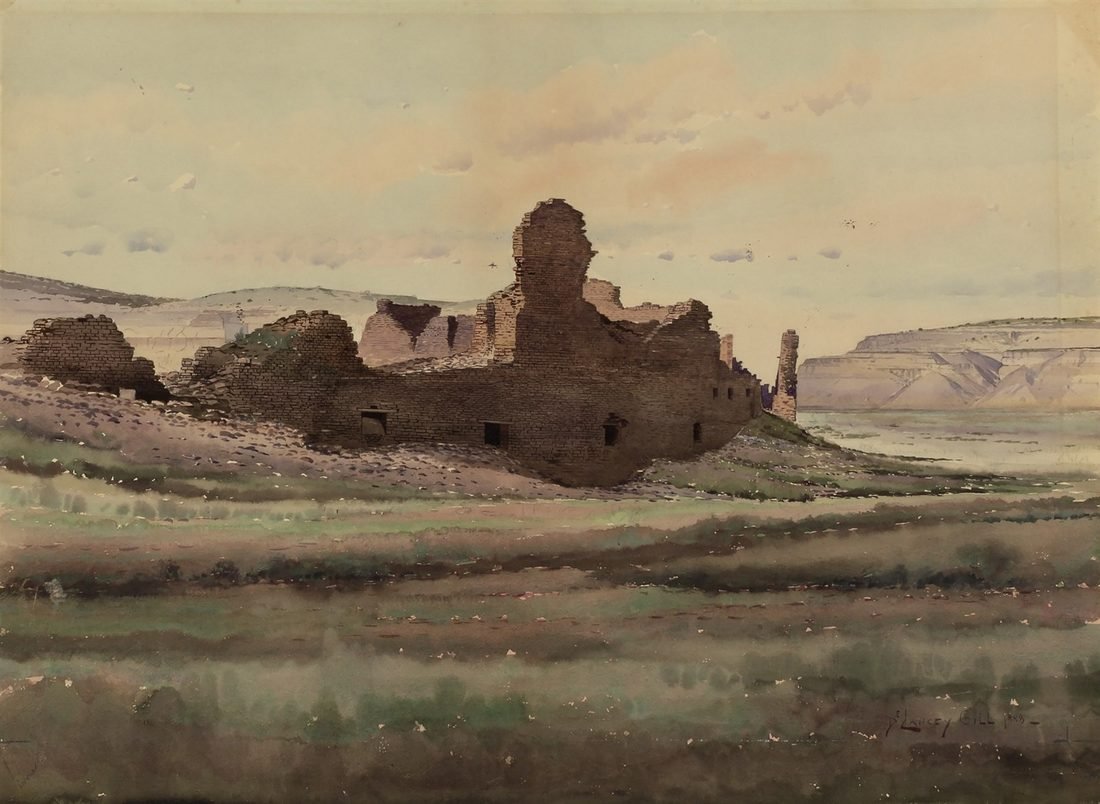
Scholars estimate that somewhere between 7 million and 18 million people lived in North America when Europeans first made contact. They were not one people. They spoke hundreds of languages, worshipped in different ways, and organized their societies according to very different principles. Some were mobile hunters following the great bison herds across the Great Plains. Others were settled farmers who had been cultivating corn, beans, and squash — the Three Sisters — for thousands of years. In the Pacific Northwest, abundance was measured in salmon, cedar, and trade, and potlatch ceremonies redistributed wealth and reinforced community relationships. In the desert Southwest, Ancestral Puebloans built multistory dwellings into cliffs and constructed complex communities long before Europe entered its modern age. Archaeological discoveries over the past century have transformed historians’ understanding of pre-contact North America, revealing cities, confederacies, trade routes, agricultural systems, law, ceremony, and political traditions across the continent.
The ancestral Puebloans were some of the first farmers in the American Southwest. Join ranger Karen Henker for a brief look at their lifestyle, as well as the art and architecture they left behind.
C. Main Events / Key Developments
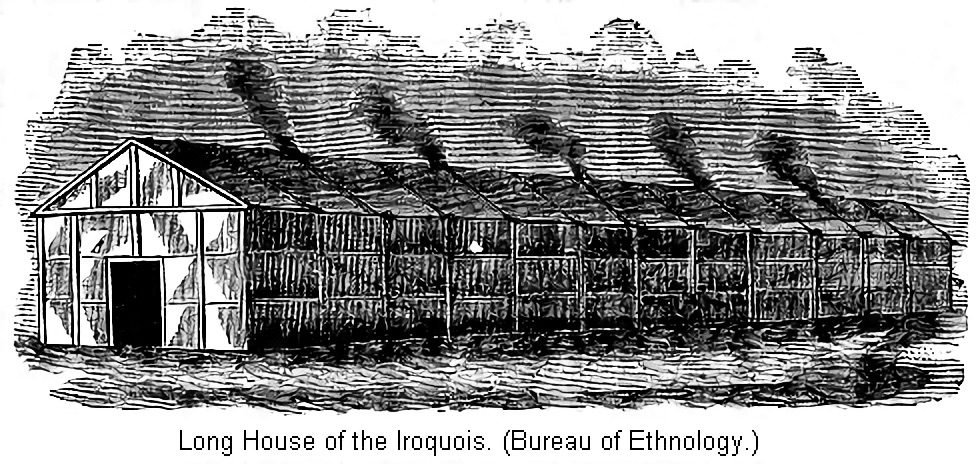
Many historians place the formation of the Haudenosaunee Confederacy, historically called the Iroquois Confederacy by Europeans, sometime between the twelfth and fifteenth centuries, though the exact date remains debated. Five nations — the Mohawk, Onondaga, Cayuga, Oneida, and Seneca — united under what they called the Great Law of Peace. Later, the Tuscarora joined, and the Confederacy became known to many outsiders as the Six Nations. The Haudenosaunee developed a constitutional tradition preserved orally for generations and later recorded in written form. Decisions required consensus. Each nation kept its own internal sovereignty while agreeing to cooperate in matters of peace, diplomacy, and collective defense. When Benjamin Franklin later urged the English colonies to unite, he pointed to the Haudenosaunee as an example. ‘It would be a very strange thing,’ he wrote, ‘if six nations of ignorant savages should be capable of forming a scheme for such a union… and yet that a like union should be impracticable for ten or a dozen English colonies.’
“This is a profile of the Haudenosaunee, by the Haudenosaunee, speaking from the present,” says filmmaker Caleb G. Abrams (Seneca, Wolf Clan) about this film, which he produced in collaboration with the Museum in 2024.
D. Important Figures
Hiawatha, a Mohawk or Onondaga leader, is credited in Haudenosaunee tradition alongside the Peacemaker, also known as Deganawida, with helping to found the Confederacy. According to tradition, the Peacemaker brought a message of peace and unity, and Hiawatha helped carry that message to warring nations. Together, they persuaded the nations to bury their weapons beneath the Great Tree of Peace. Their achievement — building durable governance among former enemies — stands as one of the most remarkable political acts in North American history.
E. Constitutional & Philosophical Issues
The Haudenosaunee Confederacy raises a question that runs through all of American history: what makes a government legitimate? The Haudenosaunee answered with consent, representation, and accountability. Chiefs were nominated by clan mothers and could be removed for misconduct. Decisions affecting all member nations required agreement. Each nation retained its own identity while participating in a larger union. The United States would later wrestle with a similar problem: how can separate states unite for common purposes while preserving their own governments? The extent of Haudenosaunee influence on the American Founders remains debated among historians. But there is no doubt that colonial leaders, including Franklin, knew of the Confederacy and saw in it a powerful example of separate peoples joining together without surrendering their identity.
F. Long-Term Historical Impact
European colonization devastated Indigenous populations through warfare, forced displacement, and — above all — disease. Estimates suggest that 50 to 90 percent of the Native population died in many regions within a century of sustained European contact. Entire communities were shattered. Languages disappeared. Nations were pushed from their homelands. Yet Indigenous peoples survived, adapted, and continued to shape American history. Their land-management practices influenced colonial agriculture. Their trade routes became colonial roads. Their diplomacy shaped imperial rivalries. Their political traditions challenged Europeans to think more deeply about union, consent, and self-government. The American story cannot be told honestly without them.
| WHY IT MATTERS TODAY | Understanding pre-contact America is not just about honoring the past. It challenges us to think carefully about government, rights, and what it means for a people to govern themselves. Many political ideas later debated by Europeans and Americans had already been practiced for centuries by nations that rarely appear in older textbooks. A complete citizen should know this history. |
Key Takeaways
- North America was home to millions of people with complex societies long before European arrival.
- Different geographic environments produced radically different cultures, economies, and governments.
- The Haudenosaunee Confederacy developed a durable system of union, representation, consensus, and shared governance.
- European contact brought catastrophic population loss through disease and violence.
- Indigenous history is not a prologue — it is part of the main story of America.
Short Writing Assignment
Imagine you are a European explorer arriving in North America for the first time. You encounter the Haudenosaunee Confederacy. Write 1–2 paragraphs describing what surprises you most about their system of government and how it compares to what you left behind in Europe.
Extended Learning (Optional)
Expanded Writing Assignment
Benjamin Franklin wrote that the Haudenosaunee Confederacy demonstrated a model worth noticing. In 3–5 paragraphs, compare the Haudenosaunee Great Law of Peace to the United States Constitution. Consider: How is power distributed? Who can remove leaders? What rights do member nations keep? What are the biggest similarities and differences? What does this comparison tell us about where American political ideas can come from?
Discussion Question
If the Haudenosaunee Confederacy was already governing effectively before Europeans arrived, what does that tell us about human nature and self-government? Is self-governance a product of one particular civilization — or is it a broader human capacity?
Primary Source Spotlight
“It would be a very strange thing, if six nations of ignorant savages should be capable of forming a scheme for such a union, and be able to execute it in such a manner as that it has subsisted ages, and appears indissoluble; and yet that a like union should be impracticable for ten or a dozen English colonies.”
— Benjamin Franklin, letter to James Parker, 1751
Franklin was not merely flattering the Haudenosaunee — and he was still using the prejudiced language of his time. His argument was aimed at his fellow colonists. If the Six Nations could build a lasting union, he suggested, the English colonies had little excuse for failing to do the same. This letter was written more than two decades before the Revolution, showing how early Americans were already thinking about unity and governance.
Extension Activity
Visit the Smithsonian National Museum of the American Indian online and explore one Native nation’s history. Write a short paragraph about one thing you learned that surprised you. Alternative: Watch a documentary or classroom video on the Haudenosaunee Confederacy and bring one key fact to share with your class or family.
Explore Further
Read the Evidence
Benjamin Franklin, Letter to James Parker (1751) — Franklin points to the Six Nations as an example when urging the English colonies to unite.
The Great Law of Peace — Read selections from English translations of the Haudenosaunee constitutional tradition and notice how it addresses peace, unity, leadership, and responsibility.
Learn More
Charles C. Mann, 1491: New Revelations of the Americas Before Columbus.
Colin G. Calloway, First Peoples: A Documentary Survey of American Indian History.
Explore
Smithsonian National Museum of the American Indian — a strong starting point for learning about Native nations, including the Haudenosaunee.
Cahokia Mounds State Historic Site / UNESCO World Heritage listing — useful for learning more about Cahokia, Monks Mound, and Mississippian civilization.
Enroll in American History 101
This lesson is free to read. Enroll to unlock all 48 lessons, the quizzes, and your Certificate of Completion.
One Time
Get lifetime access to American History 101: Pre-Colonial to Civil War
for a single one-time payment.
- 48 self-paced lessons spanning pre-colonial America through the Civil War
- A quiz with every lesson, plus a full final exam
- Exclusive “alternative perspectives” on pivotal moments other courses overlook
- Designed for high school, homeschool, and adult education
- Pay once — no subscriptions, no renewals