
Back to: AMERICAN HISTORY 101: PRE-COLONIAL TO CIVIL WAR
Lesson 16 – Lexington, Concord, and the Shot Heard ‘Round the World
| THEME | The American Revolution did not begin with a declaration — it began with ordinary farmers standing in a field, refusing to move. |
Summary
On the night of April 18, 1775, Paul Revere, William Dawes, and Samuel Prescott carried warnings through the Massachusetts countryside that British troops were marching. By dawn on April 19, about 700 British regulars faced 77 militiamen on the Lexington green. Someone fired. The British pushed on to Concord, where they found the militia ready. As they retreated back to Boston, colonial minutemen — farmers, tradesmen, ordinary men — shot at them from behind stone walls and trees all the way back to the city. By nightfall, 73 British soldiers were dead and 174 wounded. The war had begun. It would last eight years and transform the world.
Paul Revere was a Patriot leader and symbol of the American Revolution. Find out more about the man who infamously warned the minutemen of a British invasion in 1775 in this video.
Learning Objectives
By the end of this lesson, you should be able to:
- Explain the events of April 18–19, 1775 — Paul Revere’s ride, Lexington, and Concord — in accurate detail.
- Explain why the British were marching toward Concord and what they were trying to do.
- Identify the minutemen and describe what made them militarily significant.
- Analyze what the battles of Lexington and Concord revealed about the relative strengths and weaknesses of British and colonial forces.
- Explain Ralph Waldo Emerson’s phrase ‘the shot heard round the world’ and what it means for American and world history.
Visual Context
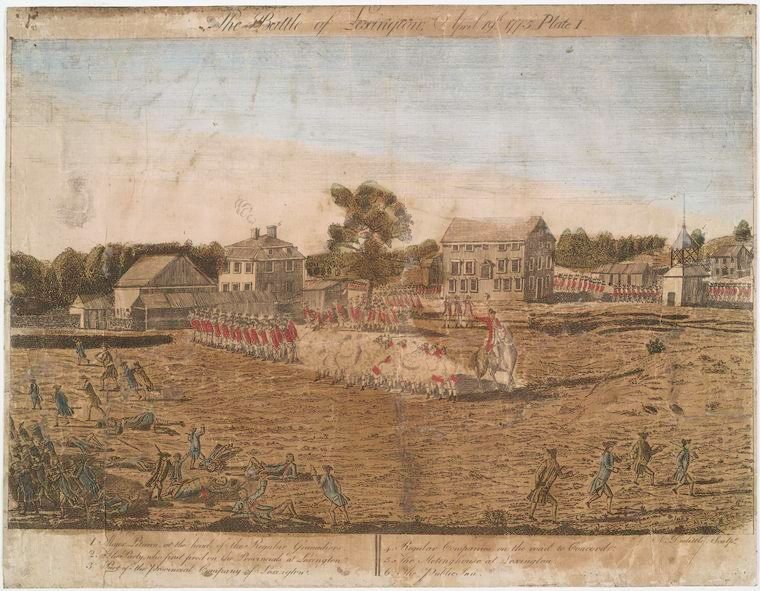
Source: Wikimedia Commons
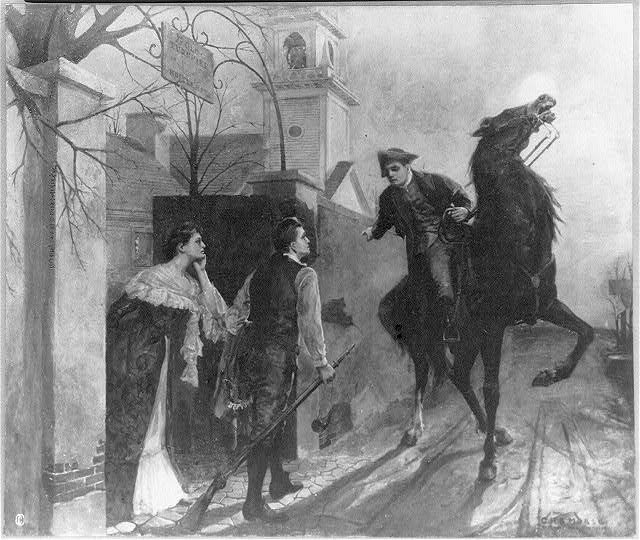
Source: Library of Congress
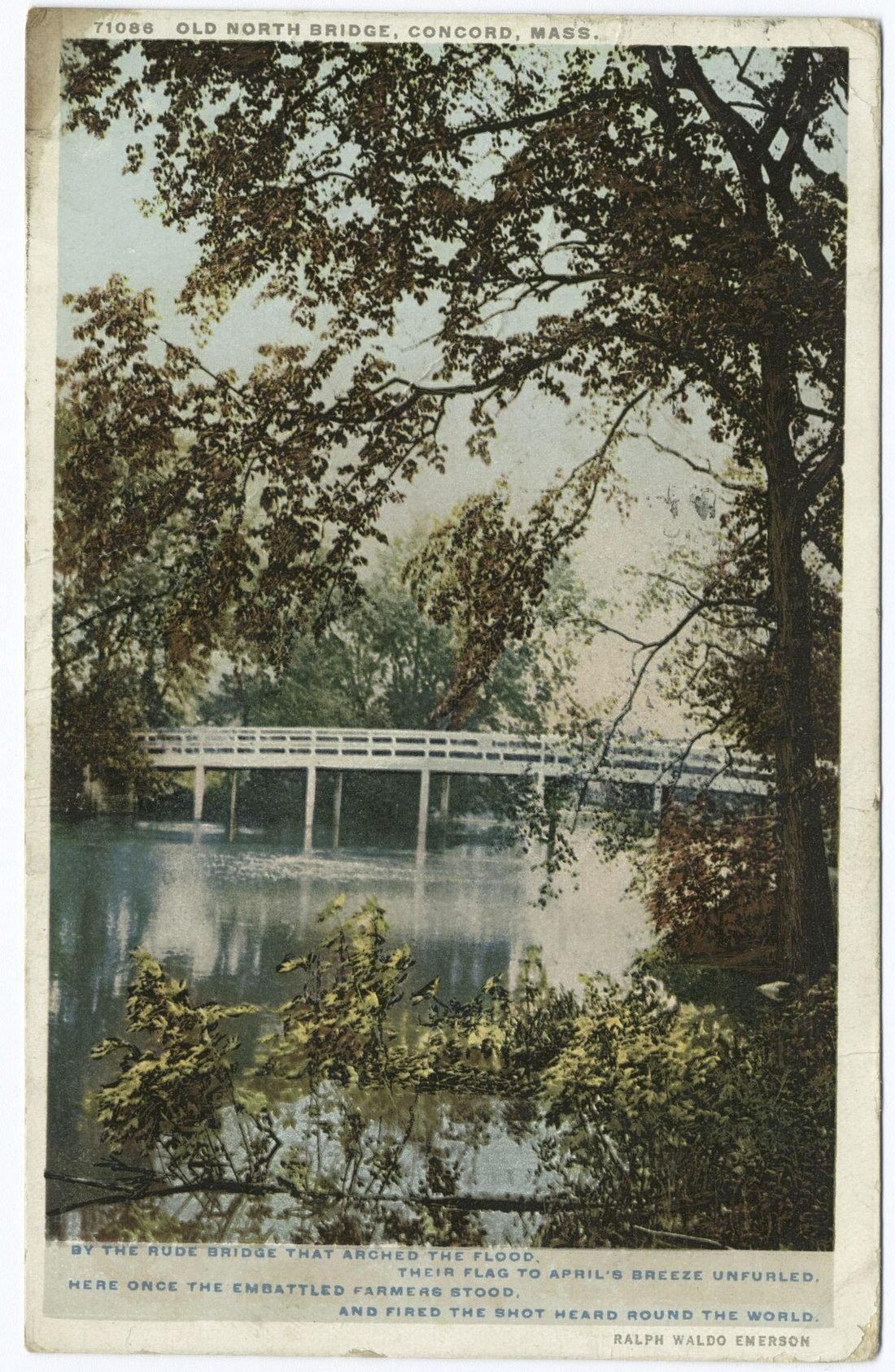
Source: New York Public Library
Key Vocabulary
| Term | Definition |
|---|---|
| Minutemen | Colonial militia members who pledged to be ready to fight at a minute’s notice — the core of the early Patriot military force. |
| Concord | The Massachusetts town where colonial militia and supplies were stored — and where British forces were marching on April 19, 1775. |
| Shot heard ’round the world | Ralph Waldo Emerson’s phrase for the first shot fired at Concord — meaning that a local event had world-historical significance. |
| Militia | A part-time military force of ordinary citizens who serve in emergencies — distinct from professional standing armies. |
| Second Continental Congress | The meeting of colonial delegates that convened in May 1775 after the battles of Lexington and Concord, and which would eventually declare independence. |
Story & Historical Narrative
A. Opening Lead
At 4:30 in the morning on April 19, 1775, Captain John Parker faced an impossible decision. His 77 militiamen stood in two lines on the Lexington common. Approaching were 700 British regulars — professional soldiers, trained, armed, and ordered to seize colonial military supplies at Concord. Parker had received word that the British were coming and called his men out. Now he had to decide: fight, or disperse? He chose a third path: stand. ‘Stand your ground,’ he reportedly told his men. ‘Don’t fire unless fired upon. But if they mean to have a war, let it begin here.’ Someone fired. Historians have debated for 250 years who shot first. It doesn’t much matter. The war had begun.
After years of intensifying hostilities between the British monarchy and the colonists, the prospect of war became inevitable.
B. The Night Before
The crisis had been building for months. Provincial committees and militia leaders had been stockpiling weapons and supplies at Concord, 18 miles from Boston. British General Thomas Gage, under orders from London to restore royal authority and suppress armed resistance, decided to strike at the supply depot. The plan required secrecy — which was impossible in Boston, where Patriots had intelligence networks throughout the city. On the night of April 18, the sexton of Old North Church hung two lanterns in the belfry (‘one if by land, two if by sea’) to signal that the British were crossing the Charles River. Paul Revere set out by boat, then by horse, toward Lexington, where Samuel Adams and John Hancock were staying. William Dawes took a different route. Samuel Prescott joined them in Lexington. Revere was stopped and detained by a British patrol; Prescott escaped and carried the warning all the way to Concord.
C. Lexington and Concord
At Lexington, the militiamen held their ground but didn’t fire first. After the initial volley — from which side is still disputed — eight colonists lay dead and ten were wounded. The British pushed on. At Concord’s North Bridge, they found a larger force of militia waiting. This time, when the British fired, the colonists fired back — the ‘shot heard round the world.’ The British found most of the supplies already moved or hidden. On the march back to Boston, the militia’s guerrilla tactics proved devastatingly effective. Shooting from behind walls, trees, and buildings — tactics they had learned fighting alongside the British in the French and Indian War — the minutemen inflicted heavy casualties on the retreating column. Only reinforcements met outside Lexington saved the British from a rout.
D. Constitutional & Philosophical Issues
Lexington and Concord raised a fundamental question: What gives ordinary citizens the right to take up arms against their government? The colonists’ answer drew on English constitutional tradition: the right of the people to keep and bear arms for their own defense was a guaranteed right of Englishmen, confirmed in the English Bill of Rights of 1689. A government that tried to disarm its citizens was a government that intended to tyrannize them — and a people who gave up their arms gave up everything. This argument would eventually be enshrined in the Second Amendment. Whether you agree with it or not, understanding why it was made — and why it mattered so much to people who had just watched their government try to disarm them — is essential to understanding American constitutional history.
E. Long-Term Historical Impact
Word of Lexington and Concord spread through the colonies within days — carried by express riders, printed in newspapers, whispered in taverns. The Second Continental Congress convened in Philadelphia in May 1775 with the news that war had already begun. Within weeks, Congress had appointed George Washington commander of the Continental Army. Within thirteen months, it had declared independence. The ‘shot heard round the world’ — Emerson’s phrase, written sixty years later — was accurate: the events of April 19, 1775 inspired republican movements across the Atlantic world, from France to Haiti to South America.
| WHY IT MATTERS TODAY | April 19, 1775 is Patriots’ Day — still a public holiday in Massachusetts and Maine. The men who stood on Lexington Green were not soldiers; they were farmers, tradesmen, and shopkeepers who had decided that the rule of law, self-government, and their constitutional rights were worth defending with their lives. That decision — made by ordinary people, not generals or politicians — is what made the American Revolution different from most revolutions in world history. It was, from the beginning, a citizens’ revolution. |
Key Takeaways
- British General Gage marched 700 troops to Concord on April 19, 1775 to seize colonial military supplies — triggering the first battles of the Revolutionary War.
- Paul Revere, William Dawes, and Samuel Prescott rode through the night to warn the Lexington and Concord militia.
- At Lexington, 8 militiamen died; at Concord’s North Bridge, the militia fired back — the ‘shot heard round the world.’
- On the march back to Boston, militia guerrilla tactics inflicted 73 British dead and 174 wounded.
- The battles led directly to the Second Continental Congress, the appointment of Washington as commander, and ultimately the Declaration of Independence.
Short Writing Assignment
Captain John Parker told his men: ‘Stand your ground. Don’t fire unless fired upon. But if they mean to have a war, let it begin here.’ In 1–2 paragraphs, analyze this statement. What does it tell us about Parker’s understanding of his situation? What was he risking? What principle was he defending? Would you have stood your ground?
Extended Learning (Optional)
Expanded Writing Assignment
Ralph Waldo Emerson wrote that the shot at Concord was ‘heard round the world.’ In 4–6 paragraphs, explain and evaluate this claim. What actually made the events of April 19, 1775 world-historically significant? How did news of Lexington and Concord influence events in France, Haiti, and South America over the following decades? What was the global significance of ordinary farmers defeating professional British soldiers? Was Emerson right?
Discussion Question
The colonists argued that a government that tried to disarm its citizens was preparing for tyranny. British officials argued that militias stockpiling weapons were preparing for rebellion — which was also true. Who was right? When, if ever, should a government disarm its citizens? When, if ever, are citizens justified in refusing? This debate — begun at Concord in 1775 — is still alive in American politics today. How should we think about it?
Primary Source Spotlight
“By the rude bridge that arched the flood, / Their flag to April’s breeze unfurled, / Here once the embattled farmers stood, / And fired the shot heard round the world.”
— Ralph Waldo Emerson, ‘Concord Hymn,’ 1837
Emerson wrote this poem for the dedication of the Concord Monument in 1837 — 62 years after the battle. His phrase ‘the shot heard round the world’ captured something true about the battle’s significance: a local event had global consequences. The American Revolution inspired republican movements across the Atlantic world. The ’embattled farmers’ — ordinary people who chose to fight for self-government — became a symbol of what Paine had called the right of every people to govern themselves.
Extension Activity
Visit the Minute Man National Historical Park website (nps.gov/mima) and read about what archaeologists and historians have learned about the Battle Road — the route the British took from Concord back to Boston. Write a paragraph about one thing that surprised you. Then answer: If you had been a British soldier on that march, what would you have thought? What would you have done differently?
Explore Further
Read the Evidence
Massachusetts Provincial Congress records and militia depositions on Lexington and Concord
Ralph Waldo Emerson, Concord Hymn (1837)
Learn More
David Hackett Fischer, Paul Revere’s Ride
Explore
Minute Man National Historical Park
The following section presents an alternative interpretation of the events of April 19, 1775, supported by historical documentation. Students are encouraged to read it alongside the main lesson narrative, weigh the evidence, and think critically about which interpretation — or combination of interpretations — best fits the historical record.
The Question Behind the Question
Every history course tells you that the Revolution began at Lexington and Concord. Fewer courses ask the precise question: Why were 700 British troops marching to Concord at dawn on April 19, 1775?
The standard answer — that tensions over taxation and self-government had finally boiled over — is true as far as it goes. But it leaves out something specific and documented: General Thomas Gage’s troops were marching to Concord for one concrete reason. They were going to seize the colonists’ weapons and gunpowder.
This was not the first time. It was the latest step in a year-long British campaign to disarm the American colonists — a campaign that had already brought Massachusetts to the edge of war, that had mobilized tens of thousands of armed citizens, and that had convinced the Crown’s own military commander that full-scale force would be required to complete.
Understanding this changes — or at least deepens — our understanding of what the ‘shot heard round the world’ was actually fired in defense of.
The Disarmament Campaign: 1774–1775
The British campaign to disarm the colonies began in earnest in the summer of 1774, under General Thomas Gage, newly appointed military governor of Massachusetts. Gage believed the most effective way to suppress colonial resistance was to remove its means: the weapons, powder, and military stores that the colonial militias depended on.
The Powder Alarm (September 1, 1774)
On August 31, 1774, Gage quietly dispatched soldiers to Charlestown to prepare the removal of gunpowder stored in the provincial powder house. The next morning, 250 British troops traveled up the Mystic River and emptied the magazine — seizing 250 half-barrels of powder — without firing a shot. A smaller unit proceeded to Cambridge and seized two artillery pieces.
The news spread through New England at a speed that stunned everyone. Rumors flew that the British had opened fire on civilians and that Boston was under naval bombardment. Within hours, militia units were mobilizing across New England. By the following day, nearly 20,000 armed men were marching toward Boston.
The rumors proved false. The standoff ended without bloodshed. But the episode — known as the Powder Alarm — sent an unmistakable message in both directions. The colonists had demonstrated that they would respond to disarmament with overwhelming force. And Gage had demonstrated that he intended to try.
Warrantless Searches and the Arms Export Ban
Following the Powder Alarm, Gage authorized warrantless searches for arms and ammunition throughout Massachusetts — an escalation the Boston Gazette called his most offensive act yet. Colonial outrage was immediate and intense.
Meanwhile, in London, the Crown was moving to cut off the supply of new weapons entirely. On October 19, 1774 — less than two months after the Powder Alarm — King George III issued an Order in Council banning all exports of arms and ammunition to the American colonies. In practice, historians note, no export permits were granted: the ban was total. The Crown also directed the Royal Navy to intercept any arms shipments bound for the colonies.
The message from London was explicit. Lord Dartmouth, Secretary of State for the Colonies, wrote to Gage suggesting that ‘disarming the Inhabitants of the Massachusetts Bay, Connecticut and Rhode Island’ would be the most effective way to prevent open conflict — while acknowledging it would require overwhelming force to accomplish.
Fort William and Mary (December 14–15, 1774)
The colonists understood what was coming. In December 1774, Paul Revere rode north to New Hampshire with a warning: British ships were heading to seize arms and powder stored at Fort William and Mary in Portsmouth Harbor. On December 14, approximately 400 New Hampshire patriots moved first. They stormed the fort and seized roughly 100 barrels of gunpowder. The following day they returned and removed 16 cannons, 60 muskets, and the remaining military stores — carrying everything away before British reinforcements arrived.
This was not a mob action. It was a calculated, organized, preemptive response to a documented British policy of confiscation.
The Final Order
In late January 1775, Lord Dartmouth sent General Gage his final instructions. They did not arrive until April 14 — five days before Lexington and Concord. The orders were unambiguous: arrest the leaders of the Massachusetts Provincial Congress. Suppress any armed assembly. And use force if necessary.
Five days later, 700 British regulars were marching to Concord.
A Different Way of Seeing April 19
The traditional narrative of the Revolution frames Lexington and Concord as the moment that years of constitutional grievance about taxation and self-government finally exploded into violence. That is accurate — as a broad account of why the Revolution happened at all.
But the specific events of April 19, 1775 were about something more immediate: whether the British government had the right to disarm a free people. The minutemen who stood on Lexington Green and fired at the North Bridge were not, in that moment, protesting the Tea Act. They were defending weapons stores that they understood to be their last guarantee of every other right they had been fighting for.
Patrick Henry had said it plainly in his famous March 23, 1775 speech, just weeks before the battle: ‘The war is actually begun! The next gale that sweeps from the north will bring to our ears the clash of resounding arms! Our brethren are already in the field! Why stand we here idle?… Is life so dear, or peace so sweet, as to be purchased at the price of chains and slavery? Forbid it, Almighty God! I know not what course others may take; but as for me, give me liberty, or give me death!’
Henry was not speaking abstractly. He was speaking in the context of a British army that had spent the previous eight months seizing gunpowder, banning arms imports, and preparing to arrest colonial leaders. The ‘liberty’ he was defending had a very specific and concrete meaning: the capacity of a free people to defend themselves against a government that had turned against them.
The Second Amendment in Historical Context
This episode is essential background for understanding why the Founders wrote the Second Amendment into the Bill of Rights just fifteen years later. The amendment was not an afterthought, and it was not primarily about hunting. It was written by men who had lived through a systematic British campaign to disarm the colonies — and who believed, from direct experience, that an armed citizenry was the ultimate check on government tyranny.
James Madison, who drafted the Bill of Rights, wrote in Federalist No. 46 that the advantage Americans had over the governments of Europe was ‘the advantage of being armed’ — which he contrasted with European governments that ‘are afraid to trust the people with arms.’ George Mason, co-author of Virginia’s Declaration of Rights (the primary model for the Second Amendment), put it even more directly: ‘To disarm the people is the most effectual way to enslave them.’
These were not theoretical arguments. They were the conclusions of men who had watched their own government try to do exactly that — and who had seen their fellow colonists fight back.
Questions for Discussion
1. The central claim of this perspective is that the immediate cause of the fighting at Lexington and Concord was British gun confiscation, not taxation. After reading both the main lesson and this alternate perspective, do you find that argument persuasive? What evidence supports it? What does it leave out?
2. The colonists’ response to the Powder Alarm — nearly 20,000 armed men mobilizing within hours — suggests that colonial society had an extraordinary capacity for rapid, organized military response. What does this tell us about the relationship between an armed citizenry and political power in colonial America?
3. Madison and Mason both argued that an armed citizenry is a check on government tyranny. Is that argument still relevant today? What would it mean to apply it in a modern context? What are the limits of the argument?
4. The British claimed they were simply trying to maintain order and prevent rebellion. The colonists claimed they were defending their fundamental rights. Is there a way to evaluate whose characterization was more accurate — or does it depend entirely on which values you start with?
Explore Further
Dave Kopel, ‘How British Gun Control Was the Spark That Started the War for Independence,’ Tenth Amendment Center, April 2025: https://tenthamendmentcenter.com/2025/04/18/how-british-gun-control-was-the-spark-that-started-the-war-for-independence/
The Suffolk Resolves (September 9, 1774) — the colonial response to the Coercive Acts, which preceded and anticipated the confrontation at Lexington.
Patrick Henry, ‘Give Me Liberty or Give Me Death’ (March 23, 1775).
James Madison, Federalist No. 46 — on the armed citizenry as a safeguard of republican government.
Liberty Tree University Resources
Videos, readings, and practice activities.
Click a title to open it.
Patrick Henry’s Speech
Enroll in American History 101
This lesson is free to read. Enroll to unlock all 48 lessons, the quizzes, and your Certificate of Completion.
One Time
Get lifetime access to American History 101: Pre-Colonial to Civil War
for a single one-time payment.
- 48 self-paced lessons spanning pre-colonial America through the Civil War
- A quiz with every lesson, plus a full final exam
- Exclusive “alternative perspectives” on pivotal moments other courses overlook
- Designed for high school, homeschool, and adult education
- Pay once — no subscriptions, no renewals