
Back to: AMERICAN HISTORY 101: PRE-COLONIAL TO CIVIL WAR
UNIT V — Expansion, Democracy, and Growing Tensions: 1803–1850
(Lessons 31–41)
Unit V follows the young republic’s explosive growth across half a century of dramatic change. It opens with the Louisiana Purchase and the Lewis and Clark expedition, which doubled the nation’s size and turned American eyes westward. The War of 1812 and the Era of Good Feelings that followed forged a new sense of national identity, even as the Missouri Compromise of 1820 exposed the deep fault line that slavery was drawing across the country. Jacksonian Democracy then broadened political participation for white men while brutally displacing Native peoples through the Indian Removal Act and the Trail of Tears. The Industrial Revolution transformed how Americans worked and lived, and a new market economy reshaped the nation from the ground up. Against this backdrop of growth and change, the Abolitionist Movement and the Seneca Falls Convention challenged the nation to confront the gap between its founding ideals and its daily realities. The unit closes with Manifest Destiny — the ideology that drove American expansion to the Pacific while deepening the sectional tensions over slavery that would eventually tear the nation apart.
Lesson 31 – The Louisiana Purchase: Doubling the Nation
| THEME | Territorial expansion and constitutional limits — Jefferson wrestled with his principles, seized the opportunity of a lifetime, and doubled the nation. |
Summary
In 1803 President Thomas Jefferson doubled the size of the United States with a single treaty, acquiring about 828,000 square miles from France for $15 million. The purchase raised profound constitutional questions, reshaped America’s relationship with Native peoples, and set the nation on a path toward continental expansion — and eventual civil war over the future of slavery in the new territories.
Learning Objectives
By the end of this lesson, you should be able to:
- Explain why Napoleon offered to sell Louisiana and why Jefferson accepted despite his constitutional reservations.
- Identify the geographic and diplomatic significance of the purchase.
- Analyze the long-term consequences for Native Americans and for the slavery debate.
Visual Context
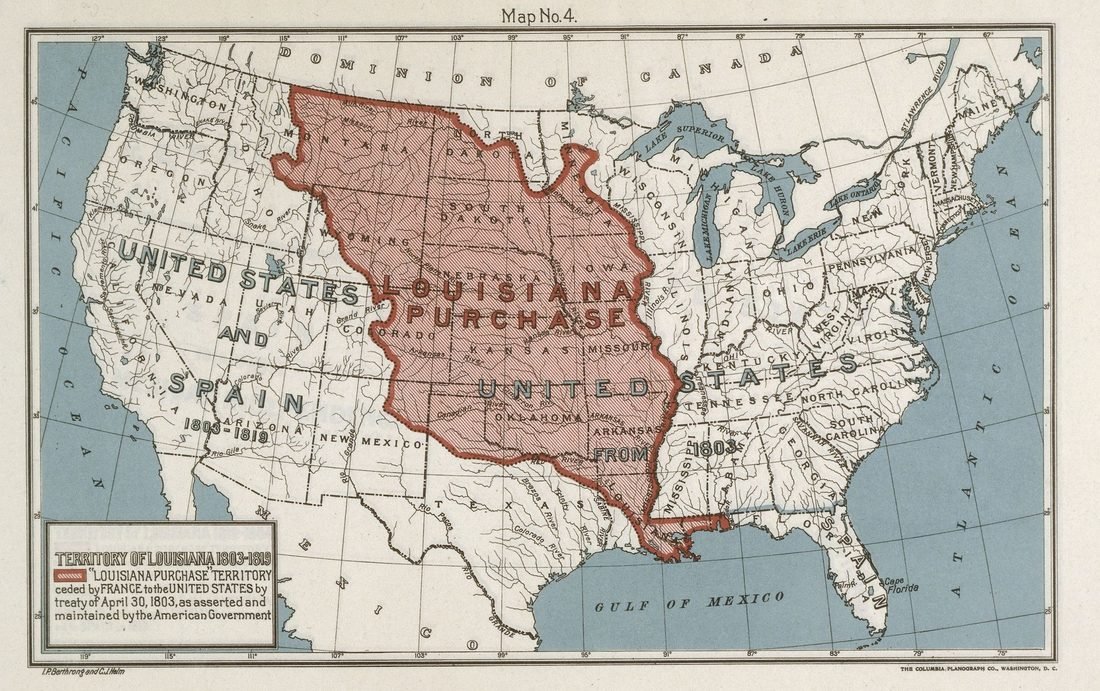
Source: Library of Congress
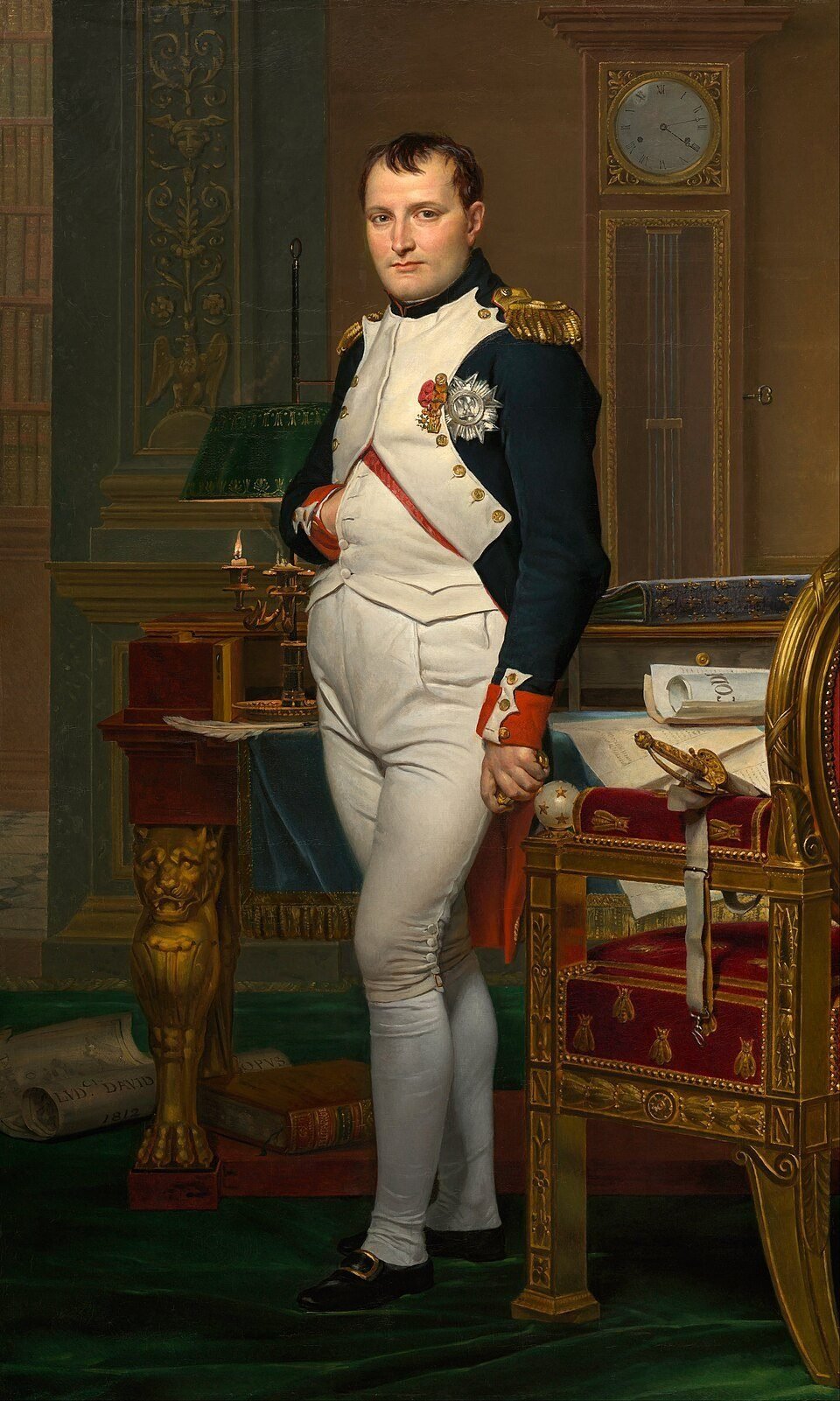
Source: National Gallery of Art
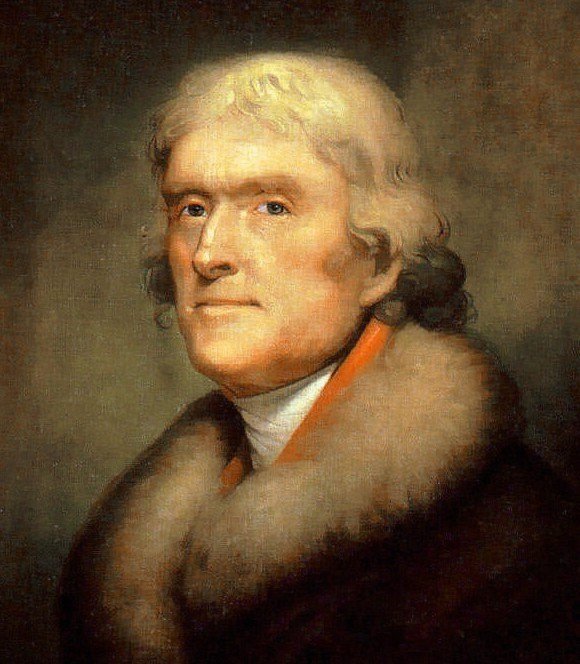
Source: Wikimedia Commons
Key Vocabulary
| Term | Definition |
|---|---|
| Louisiana Purchase | The 1803 treaty by which the United States acquired about 828,000 square miles from France for $15 million. |
| Strict constructionism | Jefferson’s philosophy that the federal government may exercise only powers explicitly granted by the Constitution. |
| Implied powers | Federal powers not explicitly stated in the Constitution but reasonably inferred from it — part of the later constitutional debate over the purchase. |
| Expeditionary diplomacy | Negotiating territorial or political agreements through exploration and reconnaissance missions. |
| Sovereignty | Supreme political authority over a territory or people. |
Story & Historical Narrative
A. The Problem of New Orleans
By 1800, thousands of American farmers in the Ohio and Mississippi River valleys depended on the port of New Orleans to ship their goods to eastern and European markets. When Spain transferred Louisiana back to France in the secret Treaty of San Ildefonso (1800), Americans feared that Napoleon would close the port to U.S. commerce — or use Louisiana as the base for a French empire in North America.
The Louisiana Purchase Explained (1803) | Thomas Jefferson, Napoleon & U.S. Expansion What was the Louisiana Purchase, and why did it double the size of the United States? In this U.S.
B. Napoleon’s Reversal
Napoleon’s grand plan collapsed when a massive slave rebellion in Saint-Domingue (Haiti), led by Toussaint Louverture, destroyed the French army he had sent to reassert control. Yellow fever killed thousands more French soldiers. Without Saint-Domingue as the economic engine of a New World empire, Louisiana had little strategic value. When war with Britain loomed again in 1803, Napoleon needed cash — not colonies.
C. Jefferson’s Dilemma
Jefferson had sent James Monroe and Robert Livingston to Paris to negotiate the purchase of New Orleans and, if possible, nearby territory. When French Foreign Minister Talleyrand surprised them by offering the entire Louisiana Territory for $15 million, they seized the opportunity before Napoleon could change his mind. Jefferson — a strict constructionist who believed the Constitution contained no explicit power for the federal government to acquire foreign territory — faced a personal crisis: insist on his constitutional scruples and risk losing the opportunity, or act boldly and expand the nation.
Jefferson ultimately chose action, relying on the president’s treaty-making power and reasoning that the practical necessity was too great to refuse. He submitted the treaty to the Senate, which ratified it 24 to 7. Jefferson privately acknowledged the constitutional difficulty — but the result, he believed, justified proceeding.
D. The Lewis and Clark Connection
Even before the purchase was finalized, Jefferson had planned an expedition to explore the West. Meriwether Lewis and William Clark would map the new territory, catalog its plants and animals, establish relations with Native nations, and find a route to the Pacific. The Corps of Discovery departed in May 1804.
E. Native Peoples and the Purchase
The United States bought Louisiana from France — but French sovereignty was mostly a European legal claim, not day-to-day control over the peoples who lived there. Dozens of Native nations had occupied and governed homelands within the territory for generations. The purchase transferred European-recognized title on paper without consulting or compensating those nations. For Native peoples, the Louisiana Purchase began a new and more aggressive phase of American expansion into their homelands.
Allen Guelzo talks about the Louisiana Purchase and the Missouri Compromise. __________________________________________________________________________ Khan Academy and National Constitution Center Constitution 101 – Unit 7
F. The Slavery Time Bomb
The vast new territories immediately raised the question that would haunt American politics for six decades: would slavery expand westward? The Missouri Compromise of 1820 would be the first attempt to answer that question. Jefferson himself wrote of the slavery problem: ‘We have the wolf by the ears, and we can neither hold him, nor safely let him go.’
| WHY IT MATTERS TODAY | Debates over executive power and constitutional interpretation continue today. When presidents act boldly in the national interest while relying on broad readings of constitutional authority, they operate in a tradition that Jefferson helped establish in 1803. The Louisiana Purchase also demonstrates how territorial expansion can involve the displacement of peoples who were already there. |
Key Takeaways
- Napoleon sold Louisiana because his New World empire collapsed after the Haitian Revolution.
- Jefferson accepted the treaty despite strict-constructionist doubts, relying on treaty power and acknowledging the constitutional difficulty.
- The purchase doubled U.S. territory but ignored the sovereignty of Native nations already living there.
- The new territories immediately reignited the slavery expansion debate that would culminate in the Civil War.
Short Writing Assignment
Was Jefferson right to set aside his constitutional principles to approve the Louisiana Purchase? In 1–2 paragraphs, defend or challenge his decision using at least two specific details from the lesson.
Extended Learning (Optional)
Expanded Writing Assignment
Compare the Louisiana Purchase to one other major U.S. territorial acquisition (Florida, Alaska, or Hawaii). In a multi-paragraph essay, analyze the circumstances, constitutional questions, and long-term consequences of both purchases.
Discussion Question
Should a president ever act beyond the explicit powers of the Constitution if the result greatly benefits the nation? What safeguards exist to prevent abuse of this reasoning?
Primary Source Spotlight
“The less we say about constitutional difficulties respecting Louisiana, the better; and what is necessary for surmounting them must be done sub silentio.”
— Thomas Jefferson, letter to John Breckinridge, 1803
Jefferson is essentially saying: do not dwell publicly on the constitutional difficulty; do what is necessary quietly and let the treaty proceed. This candid private admission shows that even Jefferson knew the purchase raised serious constitutional questions — and chose to proceed anyway.
Extension Activity
Using a physical or digital atlas, trace the route of Lewis and Clark from St. Louis to the Pacific. Identify five Native nations they encountered. Research one of those nations and write a brief report on how U.S. expansion affected them in the following century.
Explore Further
Read the Evidence
Thomas Jefferson, Letter to John Breckinridge (1803)
Learn More
Jon Kukla, A Wilderness So Immense: The Louisiana Purchase and the Destiny of America
Explore
National Archives: Louisiana Purchase Treaty and related documents
Enroll in American History 101
This lesson is free to read. Enroll to unlock all 48 lessons, the quizzes, and your Certificate of Completion.
One Time
Get lifetime access to American History 101: Pre-Colonial to Civil War
for a single one-time payment.
- 48 self-paced lessons spanning pre-colonial America through the Civil War
- A quiz with every lesson, plus a full final exam
- Exclusive “alternative perspectives” on pivotal moments other courses overlook
- Designed for high school, homeschool, and adult education
- Pay once — no subscriptions, no renewals