
Back to: AMERICAN HISTORY 102: CIVIL WAR RECONSTRUCTION TO PRESENT
Lesson 91 – The Cold War Begins: Containment, Communism, and National Security
| THEME | The Cold War was not a war in the conventional sense — there were no declared battles between American and Soviet forces. But for nearly five decades, the rivalry between two nuclear-armed superpowers shaped every aspect of American foreign policy, domestic politics, and daily life, reaching into schools, workplaces, and living rooms. |
Summary
The alliance between the United States and the Soviet Union that defeated Hitler barely survived the peace. Within two years of V-E Day, the wartime allies had become adversaries engaged in a global competition for power and influence that would last until 1991. The Soviet Union, under Joseph Stalin, imposed communist governments on Eastern Europe and sought to expand its influence throughout the developing world. The United States, under President Harry Truman, adopted a policy of ‘containment’ — using economic, military, and political means to prevent the further spread of Soviet communism.
Learn how the Truman Doctrine marked the beginning of the Cold War, how it shaped America’s attitude towards communism and how it shifted its foreign policy on interventionism with its involvement in the Mediterranean after World War II.
The Cold War was fought on many fronts: in Europe through NATO and the Marshall Plan, in Asia through the Korean War, in the developing world through covert operations and proxy conflicts, and at home through McCarthyism — a campaign of anti-communist hysteria that destroyed careers and threatened civil liberties. The nuclear arms race created the terrifying reality of mutually assured destruction.
Learning Objectives
By the end of this lesson, you should be able to:
- Explain how the wartime alliance between the U.S. and Soviet Union broke down after World War II.
- Describe the Truman Doctrine and the policy of containment.
- Explain the Marshall Plan and NATO and their roles in the Cold War strategy.
- Describe McCarthyism and its impact on American civil liberties and political culture.
- Explain the Korean War and what it reveals about the contradictions and costs of containment.
Visual Context
Source: Wikimedia Commons
Source: Harry S. Truman Library
Source: Harry S. Truman Library
Key Vocabulary
| Term | Definition |
|---|---|
| Containment | The American foreign policy strategy of using military, economic, and political means to prevent the further spread of Soviet communism — without directly attacking the Soviet Union. |
| Truman Doctrine (1947) | President Truman’s March 1947 declaration that the United States would support free peoples resisting attempted subjugation. It committed the U.S. to opposing Soviet expansion globally. |
| Marshall Plan | The American program (1948–1952) providing over $13 billion in economic aid to rebuild war-devastated Western European economies, preventing economic collapse from driving Western Europe toward communism. |
| NATO | The North Atlantic Treaty Organization, a military alliance formed in 1949 among the United States, Canada, and Western European nations. Its founding principle — an attack on one is an attack on all — committed the U.S. to the defense of Western Europe. |
| McCarthyism | The campaign of anti-communist hysteria led by Senator Joseph McCarthy in the early 1950s, characterized by reckless accusations, blacklisting, and destruction of careers based on innuendo rather than evidence. |
| Korean War (1950–1953) | The conflict in which North Korean forces invaded South Korea, prompting a U.S.-led United Nations military response. The war ended in an armistice restoring the pre-war border — with approximately 36,000 Americans and 3 million Koreans dead. |
Story and Historical Narrative
A. The Alliance Breaks Down
As the late 1940s unfolded, Soviet-backed communist governments took or consolidated control across Eastern Europe, including Poland, Hungary, Romania, Bulgaria, and Czechoslovakia. Winston Churchill described an ‘iron curtain’ descending across Europe.
B. Containment and the Truman Doctrine
The intellectual framework for American Cold War policy came from diplomat George Kennan, who argued that Soviet expansionism could not be reasoned with, only contained. President Truman gave containment its public face in March 1947, requesting $400 million in aid for Greece and Turkey and declaring that the United States would ‘support free peoples who are resisting attempted subjugation.’ The Truman Doctrine committed the United States to a global anti-communist strategy with no clear geographical limits — a commitment that would draw the country into conflicts from Korea to Vietnam to Central America.
C. The Marshall Plan and NATO
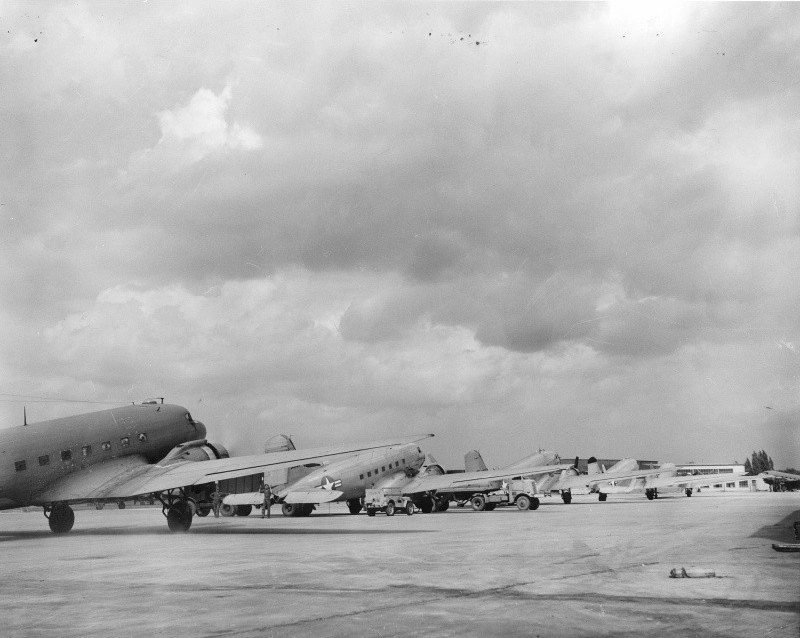
The Marshall Plan provided over $13 billion in aid to Western European nations between 1948 and 1952. It worked spectacularly: Western European economies recovered rapidly, communist parties lost political ground, and the alliance between Western Europe and the United States was cemented. When the Soviets blockaded West Berlin in 1948, the United States and Britain responded with a massive airlift that supplied the city for eleven months. NATO, formed in April 1949, institutionalized the military commitment to Western European defense.
The Marshall Plan was an example of “good deed foreign policy” designed to rebuild Western European economies in the wake of WWII.
D. The Red Scare and McCarthyism
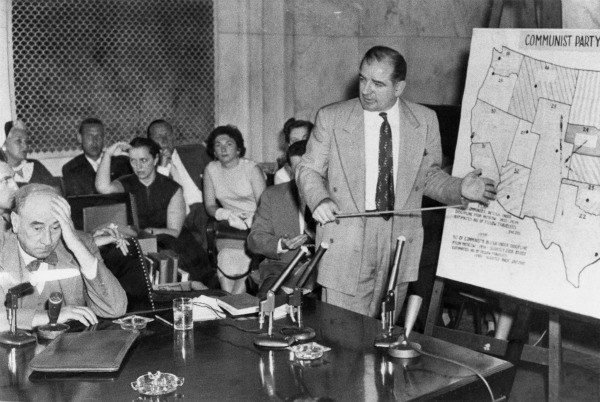
The Cold War came home in the form of the Red Scare. Senator Joseph McCarthy exploited genuine anti-communist anxiety with reckless accusations that the government was riddled with spies. McCarthy had no real evidence — his lists of ‘known communists’ shifted constantly and were never verified. But for four years, from 1950 to 1954, his charges dominated American political life. The House Un-American Activities Committee pressured witnesses to name names. Hollywood writers, academics, and government employees were blacklisted. McCarthy’s downfall came in 1954 when television cameras broadcast his bullying tactics during Army hearings, and attorney Joseph Welch confronted him: ‘Have you no sense of decency, sir?’
Preview the American Experience documentary, MCCARTHY. MCCARTHY chronicles the rise and fall of Joseph McCarthy, the Wisconsin senator who came to power after a stunning victory in an election no one thought he could win.
E. The Korean War
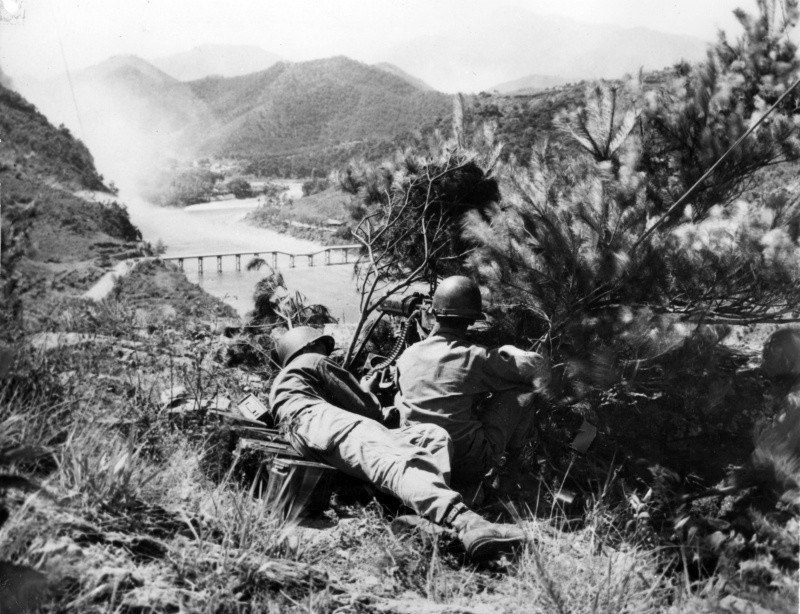
When North Korean forces invaded South Korea on June 25, 1950, Truman committed American forces under a United Nations mandate without seeking a Congressional declaration of war — establishing the precedent of ‘presidential war’ that would recur in Vietnam, Iraq, and Afghanistan. The war went through dramatic swings: MacArthur’s brilliant Inchon landing pushed North Korean forces back to the Chinese border; China’s intervention drove UN forces back; a grinding stalemate followed. Truman fired MacArthur when he publicly disputed the strategy, asserting civilian control of the military. The war ended in armistice in July 1953, restoring the pre-war border. About 36,000 Americans and 3 million Koreans died.
| WHY IT MATTERS TODAY | The Cold War’s institutional legacy shapes American foreign and domestic policy today. NATO — created in 1949 — remains the cornerstone of American alliance strategy in Europe. The CIA, NSA, and the national security state were created during the Cold War. McCarthyism’s legacy is visible in every debate about civil liberties and national security. And the Korean War’s armistice — never replaced by a peace treaty — means the Korean peninsula technically remains in a state of war. |
Key Takeaways
- The wartime alliance with the Soviet Union collapsed quickly after World War II, as Stalin imposed communist governments across Eastern Europe.
- The Truman Doctrine committed the United States to supporting free peoples resisting communist pressure anywhere in the world.
- The Marshall Plan and NATO were the economic and military pillars of containment in Western Europe — both proved highly successful.
- McCarthyism — Senator McCarthy’s anti-communist campaign — destroyed careers, suppressed civil liberties, and poisoned American political culture.
- The Korean War tested containment militarily, established the precedent of presidential war without a Congressional declaration, and ended in a costly stalemate.
Short Writing Assignment
McCarthyism destroyed careers and suppressed free speech in the name of protecting national security. In one to two paragraphs, explain how McCarthy was able to wield such power for four years despite having no real evidence. What does this episode tell us about the relationship between fear, political ambition, and civil liberties?
Extended Learning (Optional)
Expanded Writing Assignment
In 4–6 paragraphs, evaluate the policy of containment as a grand strategy. What were its strengths? What were its costs — in lives, in treasure, in civil liberties at home, and in the moral compromises required to support anti-communist regimes that were themselves often authoritarian? And how should we evaluate a strategy that ultimately ‘won’ the Cold War but at enormous cost over 45 years?
Discussion Question
President Truman committed American forces to Korea without a Congressional declaration of war, relying on a United Nations Security Council resolution as his legal authority. This established the precedent of ‘presidential war’ used ever since — in Vietnam, Iraq, Afghanistan, and smaller conflicts. Was Truman right to act without a Congressional declaration? Does the president have the constitutional authority to commit troops to combat without Congressional approval?
Primary Source Spotlight
“Have you no sense of decency, sir? At long last, have you left no sense of decency?”
— Joseph Welch, Army chief counsel, to Senator Joseph McCarthy, Army-McCarthy Hearings, June 9, 1954
Welch’s words — broadcast live on national television — marked the beginning of McCarthy’s political collapse. What does this episode tell us about the role of television in American political life? And what does McCarthy’s four-year reign tell us about the vulnerability of democratic institutions to demagogues who exploit genuine fears?
Explore Further
Read the Evidence
George F. Kennan, “The Sources of Soviet Conduct” (1947) — Read the Evidence: Kennan explains the logic behind containment.
Learn More
John Lewis Gaddis, The Cold War: A New History — A concise, balanced overview of Cold War strategy and conflict.
Explore
Harry S. Truman Presidential Library — Explore documents and exhibits on the Truman Doctrine, Marshall Plan, Berlin Airlift, and Korean War.
The following presents a non-interventionist perspective on the Korean War and American military engagements more broadly, arguing that U.S. military interventions since World War II have not been justified by genuine threats to American security and have served the interests of financial and industrial elites rather than ordinary Americans.
A. Truman Was Not Right to Commit Forces to Korea
The mainstream lesson presents Truman’s decision to commit American forces to Korea as the application of the containment doctrine — a reasonable response to communist aggression that tested American resolve. The alternate perspective challenges this directly: Truman was not right to commit American forces to Korea. North Korea was not a threat to the United States. No vital American security interest was at stake. The decision was made without a Congressional declaration of war — establishing a precedent of executive military action that has been used to justify every subsequent American military intervention, large and small.
The Korean War cost approximately 36,000 American lives, enormous resources, and ended in an armistice near the pre-war border. Supporters argue that South Korea’s survival as a non-communist state was a major achievement of containment. Critics argue that the result was purchased at terrible human cost, without a congressional declaration of war and without a final peace treaty. The lesson notes that Korea is sometimes called ‘the Forgotten War.’ Perhaps it is forgotten partly because Americans have never fully resolved what the war accomplished and whether its costs were justified.
B. A Pattern of Unnecessary Wars
In many of these cases, critics argue, the United States was not facing a direct military threat to its territory or population. In many of them, the decision to use military force was shaped by executive branch officials, strategic doctrines, alliance commitments, and financial or industrial interests that stood to benefit from military spending. This does not prove that every intervention was undertaken for profit, but it does require citizens to ask who benefits, who pays, and who bears the human costs.
Defense contractors, weapons manufacturers, some energy interests, financial institutions that finance government debt, and political or military actors whose influence grows during conflict may all benefit from war.
C. The Influence of Pro-War Interests in Government
The influence of banking and defense interests on American foreign policy is not a secret. It is documented, discussed openly in Washington, and acknowledged by participants. Dwight Eisenhower — the Supreme Allied Commander in World War II and a two-term president — warned in his farewell address in 1961 about the ‘military-industrial complex’: the alliance of defense contractors, the military establishment, and Congress that had a structural interest in maintaining and expanding military spending regardless of genuine security needs. Eisenhower was not a radical or a conspiracy theorist. He was the most experienced military-political figure in American history, and he saw the pattern clearly.
Some critics of centralized power point to statements by Woodrow Wilson warning about concentrated financial and political influence. Those statements should be handled carefully: some quotations commonly attributed to Wilson are disputed or misquoted. What is historically secure is that Wilson’s presidency greatly expanded national and international commitments – including the Federal Reserve, the income tax, wartime mobilization, and wartime restrictions on civil liberties – and that later critics have used his career to illustrate the danger of concentrated power operating beyond ordinary democratic accountability.
D. What a Non-Interventionist Foreign Policy Would Look Like
The alternate perspective does not argue for complete isolation or indifference to events abroad. It argues for a foreign policy genuinely oriented toward American security — which is a much narrower standard than the containment doctrine, the Bush Doctrine, the responsibility to protect, or any of the other frameworks that have been used to justify American military interventions since 1950.
A genuinely defensive foreign policy would ask, for every proposed military engagement: Does this country or group pose a direct military threat to the United States or its treaty allies? Has every non-military option been exhausted? Has Congress formally declared war as the Constitution requires? Is the American public, fully informed, prepared to bear the costs? In most of the interventions of the past seventy years, the honest answer to most of these questions has been no.
- Korea (1950): No direct threat to U.S. territory. No Congressional declaration of war. Ended at the pre-war border after 36,000 American deaths.
- Vietnam (1965–1973): No direct threat to U.S. territory. No formal declaration of war. 58,000 American deaths. Ended in defeat.
- Iraq (2003): No stockpiles of weapons of mass destruction were found. No operational connection to 9/11 was established. Congress authorized force, but did not issue a formal declaration of war. The invasion destabilized the region for years.
- Afghanistan (2001–2021): The initial response to 9/11 had legitimate justification. The twenty-year occupation did not. Ended with the Taliban in control — exactly where things stood before the war began.
E. Until the People Wake Up
The pattern will not change until the American people understand it clearly. The pro-war segment of American government — the officials, contractors, lobbyists, and media figures who benefit from continuous military engagement — has a strong incentive to maintain public fear and public confusion about American security. They have the resources to shape public opinion, the access to manufacture threats, and the connections to ensure that the financial costs of war are spread across all taxpayers while the profits flow to a relatively small number of beneficiaries.
The solution is not cynicism — it is clarity. A citizen who understands how military spending decisions are actually made, who benefits from them, and what the real record of American military interventions looks like is a citizen who can make genuinely informed judgments about foreign policy. That is what this course — and this alternate perspective — is trying to produce.
It includes Washington’s warning against permanent alliances, Jefferson’s warning against entangling alliances, John Quincy Adams’s declaration that America ‘goes not abroad in search of monsters to destroy,’ and Eisenhower’s warning about the military-industrial complex.
Enroll in American History 102
This lesson is free to read. Enroll to unlock all 48 lessons, the quizzes, and your Certificate of Completion.
One Time
Get lifetime access to American History 102: Reconstruction to the Modern Era
for a single one-time payment.
- 48 self-paced lessons from Reconstruction to the 21st century
- A quiz with every lesson, plus a full final exam
- Exclusive “alternative perspectives” on pivotal moments other courses overlook
- Designed for high school, homeschool, and adult education
- Pay once — no subscriptions, no renewals