
Back to: AMERICAN HISTORY 102: CIVIL WAR RECONSTRUCTION TO PRESENT
Lesson 77 – Federal Reserve and Jekyll Island
| THEME | The Federal Reserve System, created in 1913, is one of the most powerful and least understood institutions in American government. Its creation came after a series of financial panics demonstrated that the country desperately needed a central bank — and after a secret meeting on a private island that has fueled debate ever since. |
Summary
For most of the 19th century, the United States had no central bank. This made the American financial system uniquely vulnerable to panics — sudden collapses of confidence that caused banks to fail, credit to freeze, and the economy to contract sharply. The Panic of 1907 was the last straw: only the personal intervention of J.P. Morgan prevented a complete financial collapse. After 1907, even bankers who had opposed a central bank concluded the country needed one.
In 1907, the United States faced one of the worst financial panics in its history. Perhaps it was a preview of the Great Depression. Banks collapsed, depositors rushed to withdraw their savings, and the government was powerless to stop the crisis.
What followed was years of debate, a remarkable secret meeting on Georgia’s Jekyll Island, and finally the Federal Reserve Act of 1913. Understanding the Fed means understanding banking, monetary policy, and the ongoing tension between public accountability and technocratic expertise — as well as the serious questions critics have raised about who the Fed truly serves.
Learning Objectives
By the end of this lesson, you should be able to:
- Explain why financial panics were so common in 19th-century America.
- Describe the Panic of 1907 and explain why it made central banking practically inevitable.
- Explain what happened at Jekyll Island and why it was kept secret.
- Describe the structure and functions of the Federal Reserve System.
- Analyze the debate over the Federal Reserve — including mainstream and critical perspectives.
Visual Context
Source: Library of Congress
Source: Library of Congress
Source: Wikimedia Commons
Key Vocabulary
| Term | Definition |
|---|---|
| Central bank | A national financial institution that helps manage a country’s monetary policy, supervises parts of the banking system, and serves as a lender of last resort in financial crises. |
| Panic of 1907 | A severe financial crisis in which a failed attempt to corner the copper market triggered a run on banks. J.P. Morgan organized a private rescue that prevented total collapse but made clear the need for a formal central banking system. |
| Jekyll Island meeting (1910) | A secret gathering of leading bankers and Senator Nelson Aldrich on Georgia’s Jekyll Island, where they drafted what became the framework for the Federal Reserve System. The meeting was kept secret because the participants feared public knowledge of banker involvement would doom the legislation. |
| Federal Reserve System | The central banking system of the United States, created by the Federal Reserve Act of 1913. It consists of twelve regional Federal Reserve Banks overseen by a Board of Governors in Washington, D.C. |
| Monetary policy | Government decisions about the money supply and interest rates, aimed at achieving economic goals like stable prices, full employment, and sustainable growth. |
| Lender of last resort | A central bank’s role of providing emergency loans to banks facing a crisis — preventing bank runs from turning into broader financial collapses. |
Story and Historical Narrative
A. America Without a Central Bank
For most of the 19th century, the United States had no central bank. Andrew Jackson had destroyed the Second Bank of the United States in 1832. This left the country with a fragmented banking system — thousands of independent banks, each subject to sudden runs if depositors lost confidence. The result was a financial system prone to panics in 1873, 1884, 1893, and 1907.
B. The Panic of 1907
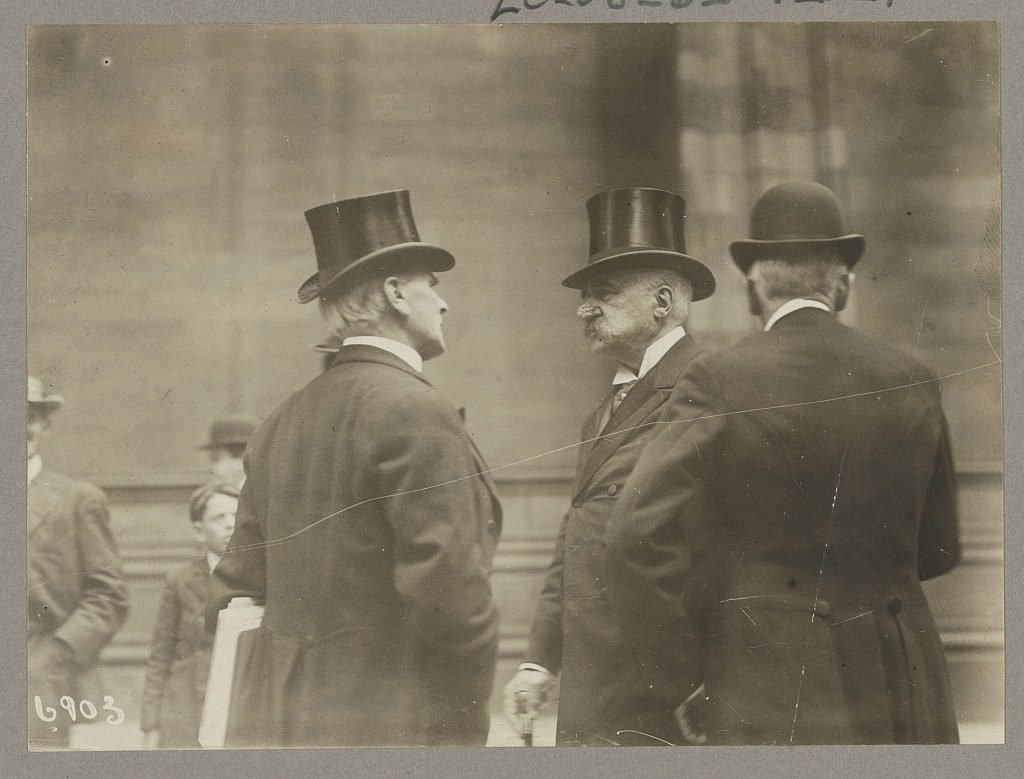
The Panic of 1907 began with a failed attempt to corner the copper market. When the scheme collapsed, trust companies began to fail and depositors rushed to withdraw savings. J.P. Morgan — then 70 years old — personally organized the rescue, locking New York’s leading bankers in his library until they agreed to pool resources. It worked. But the episode made clear that the country could not continue to depend on one aging private citizen to save the financial system from crisis.
C. The Jekyll Island Meeting
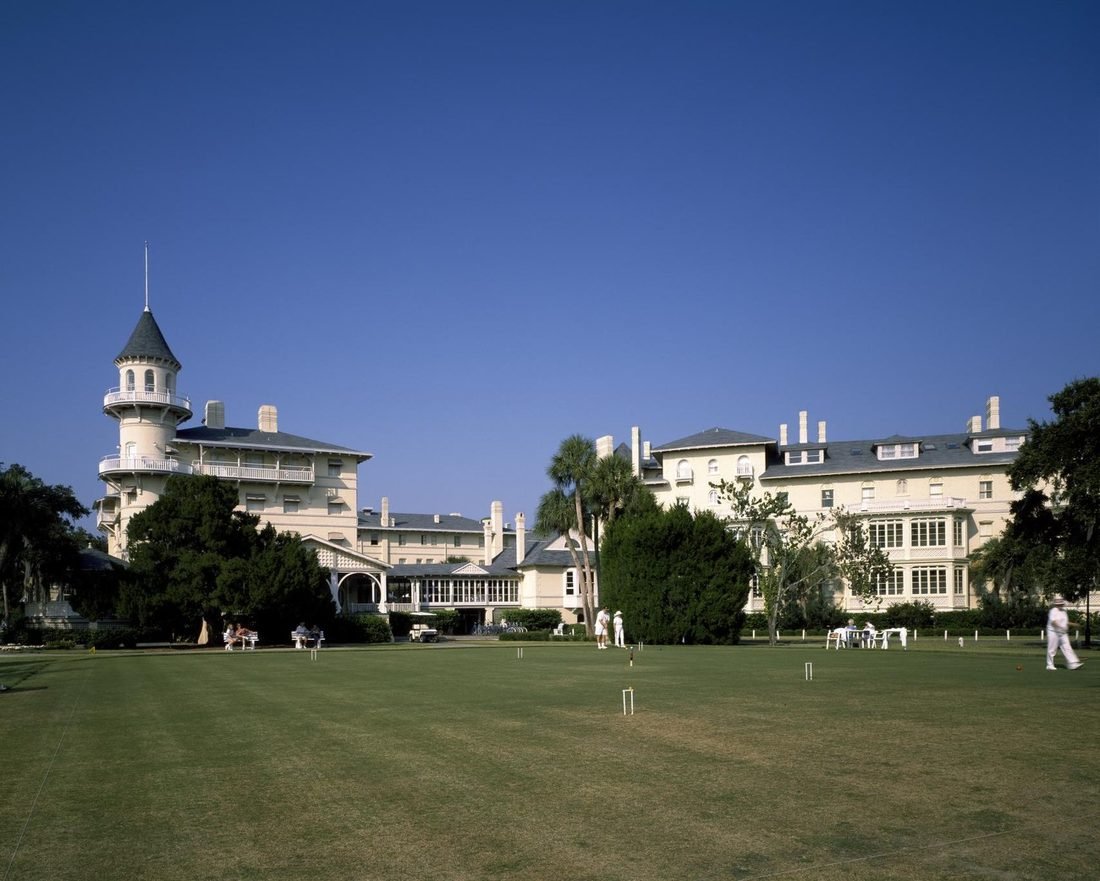
Senator Nelson Aldrich gathered a small group of influential bankers and financial experts for a secret meeting on Jekyll Island. The participants used only first names, traveled in a private railcar, and kept the meeting secret for years afterward. Over nine days they drafted a plan that influenced the later debate over a central banking system. The final Federal Reserve Act differed from Aldrich’s proposal, but the Jekyll Island plan provided an important framework.
In November 1910, six of the most powerful men in American finance boarded a private railcar under fake names and disappeared to a remote island off the coast of Georgia. They used first names only. They dismissed every member of staff before they arrived.
The secrecy was deliberate. The participants knew that a plan drafted openly by Wall Street bankers would be politically toxic. Frank Vanderlip later admitted: ‘If it became known that our group had gotten together and written a banking bill, that bill would have no chance whatever of passage by Congress.’
D. The Federal Reserve Act of 1913
The Wilson administration reworked the Aldrich Plan into a more politically acceptable form: twelve regional Federal Reserve Banks, whose stock is held by member banks, overseen by a presidentially appointed Board in Washington. This hybrid public-private structure was designed to address both the need for a lender of last resort and Progressive fears of concentrated Wall Street power.
Experience 100 years of Fed history in just five minutes! This video, which was only previously available inside our museum, takes a look back to the early 1900s to see why the Federal Reserve was created … and then flashes forward to see how the central bank has responded to different economic crises.
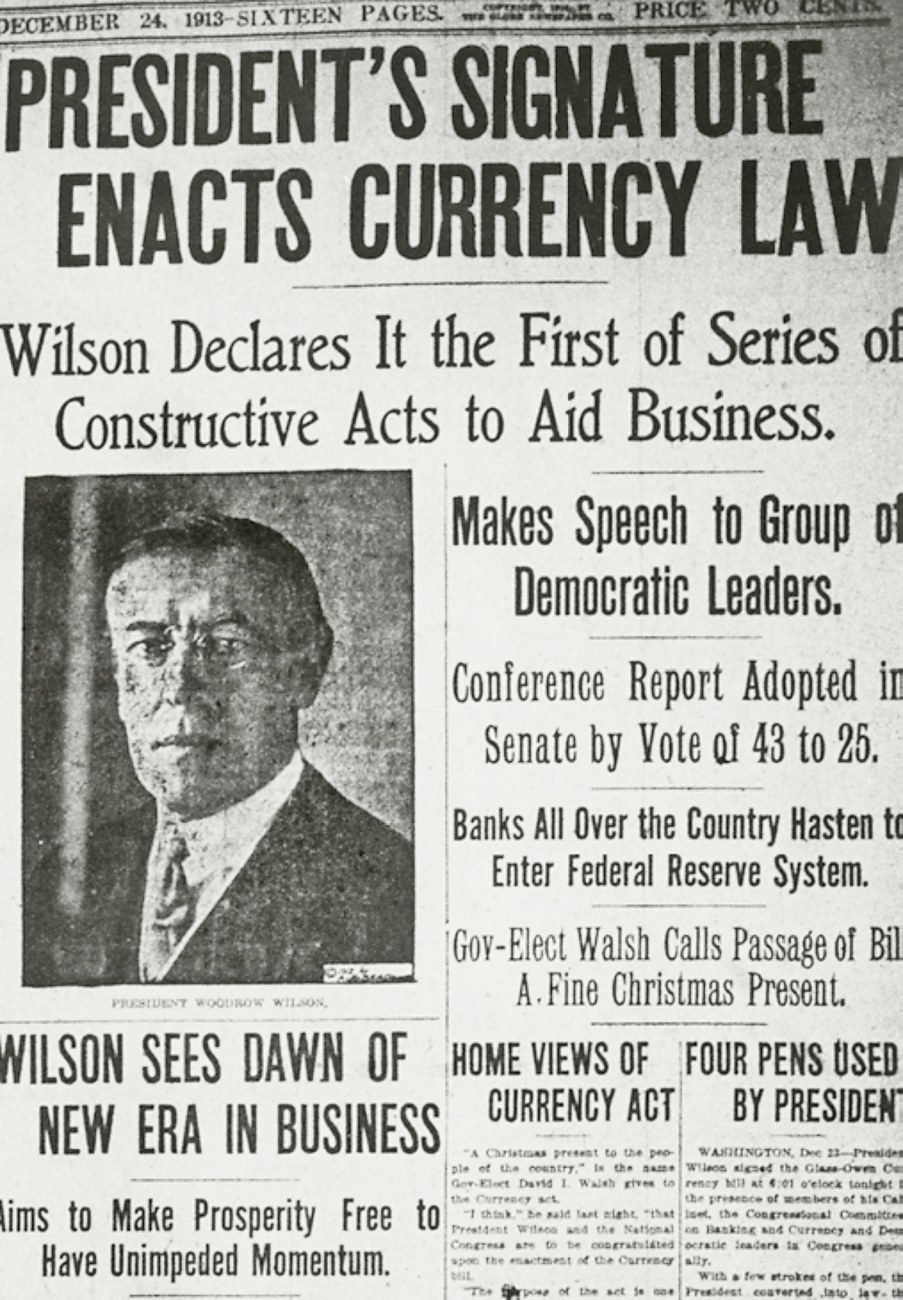
The Federal Reserve Act passed Congress in December 1913. The new system gave the country its first permanent mechanism for managing monetary policy and providing emergency credit to banks. In practice, the Fed’s early record was mixed: it failed to prevent the Great Depression, and was significantly reformed by New Deal legislation as a result.
E. The Fed Today
The Federal Reserve today is one of the most powerful institutions in the world. Its decisions on interest rates affect mortgages, business investment, employment, and inflation. The Fed’s chair is one of the most consequential economic policymakers on the planet. Whether the Fed’s structure — semi-private, with significant independence from both Congress and the President — provides the right balance between expertise and democratic accountability is a question that has never been fully resolved, and that the Alternate Perspective section below examines in detail.
| WHY IT MATTERS TODAY | whose origins include a secret meeting on a Georgia island and a later public legislative debate in Congress. |
Key Takeaways
- Without a central bank, 19th-century America suffered repeated financial panics that devastated the economy.
- The Panic of 1907 was contained only by J.P. Morgan’s personal intervention, making clear that the country needed a formal central bank.
- The Jekyll Island meeting of 1910 was a secret gathering of Senator Aldrich and leading financial figures whose plan influenced the framework for what became the Federal Reserve, though Congress later altered it.
- The Federal Reserve Act of 1913 created a compromise system of twelve regional banks overseen by a presidentially appointed Board of Governors.
- The Federal Reserve remains one of the most powerful and most debated institutions in American government.
Short Writing Assignment
The Jekyll Island participants kept their meeting secret because they knew that a banking reform plan written by bankers would never pass. In one to two paragraphs, reflect on what this tells us about the relationship between democratic politics and economic policy. Is it ever legitimate for experts to design policy in secret, away from public scrutiny? What are the risks of this approach?
Extended Learning (Optional)
Expanded Writing Assignment
In 4–6 paragraphs, evaluate the Federal Reserve as a democratic institution. What is the argument for central bank independence? What is the argument against? Which do you find more persuasive, and what reforms, if any, would you propose?
Discussion Question
J.P. Morgan’s personal rescue of the financial system in 1907 demonstrated both the inadequacy of private solutions to public problems and the extraordinary power that concentrated private wealth can exercise over the entire economy. Does this episode support the argument for a publicly accountable central bank — or does it raise concerns about replacing private power with an equally unaccountable public institution?
Primary Source Spotlight
“We were six men in a private railroad car traveling under conditions of great secrecy… Discovery, we knew, simply must not happen, or else all our hard work would be wasted.”
— Frank Vanderlip, describing the Jekyll Island meeting, in his 1935 memoir
Vanderlip openly acknowledges that the bill was designed in secret because public knowledge would have killed it. What does this tell us about the relationship between private economic power and public democratic processes?
Explore Further
Read the Evidence
Federal Reserve Act of 1913; Frank Vanderlip’s recollections of the Jekyll Island meeting.
Learn More
Roger Lowenstein, America’s Bank; Liaquat Ahamed, Lords of Finance.
Explore
Federal Reserve History resources on the Panic of 1907 and the creation of the Federal Reserve.
Contributed perspective: The following offers a critical re-examination of the Federal Reserve’s creation, drawing on sources including G. Edward Griffin’s The Creature from Jekyll Island, Smedley Butler’s War Is a Racket, and Melvin Stamper’s From the Fruit of the Poisonous Tree. These works represent a minority or dissenting perspective within mainstream academic history. They are included here to help students evaluate arguments about banking power, war finance, and democratic accountability, not as settled conclusions.
A. ‘Colonel’ House Was Never a Colonel
One detail the mainstream account glosses over: Edward Mandell House, the shadowy adviser who shaped Woodrow Wilson’s presidency, was never actually a colonel. His title was purely honorary — he performed no military service. This matters because it illustrates how carefully crafted his public image was. According to his Wikipedia biography, House was ‘known as Colonel House, although his title was honorary and he had performed no military service.’
Critics argue that House may have served as an informal bridge between Wilson and powerful financial interests, including figures connected to J.P. Morgan and Paul Warburg who supported some form of central banking reform. Mainstream historians generally describe House as an influential political adviser rather than as a proven ‘operative’ of banking interests. The distinction matters: one claim is well established; the other requires stronger evidence.
B. How Wilson Became President: The Bull Moose Strategy
The alternate perspective asks why Roosevelt really ran and whether powerful donors or financial interests benefited from the split in the Republican vote. Mainstream historians usually explain Roosevelt’s campaign through his genuine break with Taft and his desire to lead a more Progressive Republican movement. Students should distinguish between a political outcome that benefited certain interests and proof that those interests engineered the outcome.
If this interpretation were correct, the 1912 election would look less like a straightforward democratic contest and more like a contest shaped by powerful interests behind the scenes. The evidence for that stronger claim is circumstantial and disputed. Students should ask: what evidence would be necessary to prove deliberate manipulation, and what evidence merely shows that wealthy interests tried to influence politics, as they often do?
C. The Federal Reserve Is Not a Government Institution
The name ‘Federal Reserve’ was deliberately reassuring, critics argue, because the system combined public authority with private-bank participation. It is not a conventional executive-branch agency, but it is also not simply a private corporation. The regional Federal Reserve Banks have stock held by member banks, while the Board of Governors is a federal agency whose members are appointed by the President and confirmed by the Senate.
The Federal Reserve functions too much like a cartel of private banks operating under government protection, with the power to influence money and interest rates — powers that profoundly affect every American’s financial life. Mainstream economists and historians disagree with the word ‘cartel,’ emphasizing the Fed’s public mandate and government oversight, but they also acknowledge the unusual public-private design.
D. War Is a Racket — Who Benefits from War?
Major General Smedley Butler was the most decorated Marine in American history at the time of his death. After retiring, he wrote a short book called War Is a Racket (1935), in which he argued bluntly that the wars he had fought were conducted primarily for the benefit of corporations and financial interests, not for the defense of the American people. His most famous line: ‘War is a racket… conducted for the benefit of the very few at the expense of the many.’
Butler’s critique is relevant to debates about WWI and war finance, though Butler wrote after the war and with the benefit of hindsight. The alternate perspective asks: who benefited from American entry into the war? The answer includes defense contractors, munitions manufacturers, banks that had lent heavily to the Allies and needed them to win, and the broader financial establishment tied to wartime production and credit.
E. Wilson’s Broken Promises and the Case Against U.S. Entry into WWI
The war in Europe might have moved toward a negotiated settlement had the United States remained out, though historians disagree sharply about how likely that was. Wilson’s decision for war rested on real provocations — especially unrestricted submarine warfare and the Zimmermann Telegram — but critics argue those provocations were used to justify a choice already favored by influential political and financial actors.
This is a debated position rather than the mainstream consensus. Many historians acknowledge that economic interests, Allied loans, propaganda, submarine warfare, and the Zimmermann Telegram all shaped public opinion and policy. Students should separate the claim that financial interests benefited from U.S. entry — which is well supported — from the stronger claim that they controlled Wilson’s decision, which remains disputed.
F. Suggested Reading
Students who wish to explore these alternative perspectives further may find the following works useful:
- War Is a Racket by Major General Smedley Butler (1935) — A short, direct argument by America’s most decorated soldier that wars often enrich private interests while ordinary soldiers bear the cost.
- The Creature from Jekyll Island by G. Edward Griffin — A detailed critical history of the Federal Reserve’s creation, arguing it represents private banking interests controlling public monetary policy.
- From the Fruit of the Poisonous Tree by Melvin Stamper — A critical examination of constitutional and legal frameworks surrounding the Federal Reserve and the income tax.
- World War I: The Rest of the Story by Richard Maybury — An economist’s argument that WWI’s causes and consequences are more complex and less heroic than the standard account.
A note on evaluating these sources: The works listed above represent a minority perspective within mainstream academic history. Students should read them critically — asking what evidence the authors provide, what assumptions they make, and where their arguments are strongest and weakest. Disagreeing with the consensus is not the same as being wrong; but it does require a higher standard of evidence. Good historical thinking means weighing all the evidence, not simply choosing the narrative that confirms what you already believe.
Enroll in American History 102
This lesson is free to read. Enroll to unlock all 48 lessons, the quizzes, and your Certificate of Completion.
One Time
Get lifetime access to American History 102: Reconstruction to the Modern Era
for a single one-time payment.
- 48 self-paced lessons from Reconstruction to the 21st century
- A quiz with every lesson, plus a full final exam
- Exclusive “alternative perspectives” on pivotal moments other courses overlook
- Designed for high school, homeschool, and adult education
- Pay once — no subscriptions, no renewals